Can AI Create Great Art?
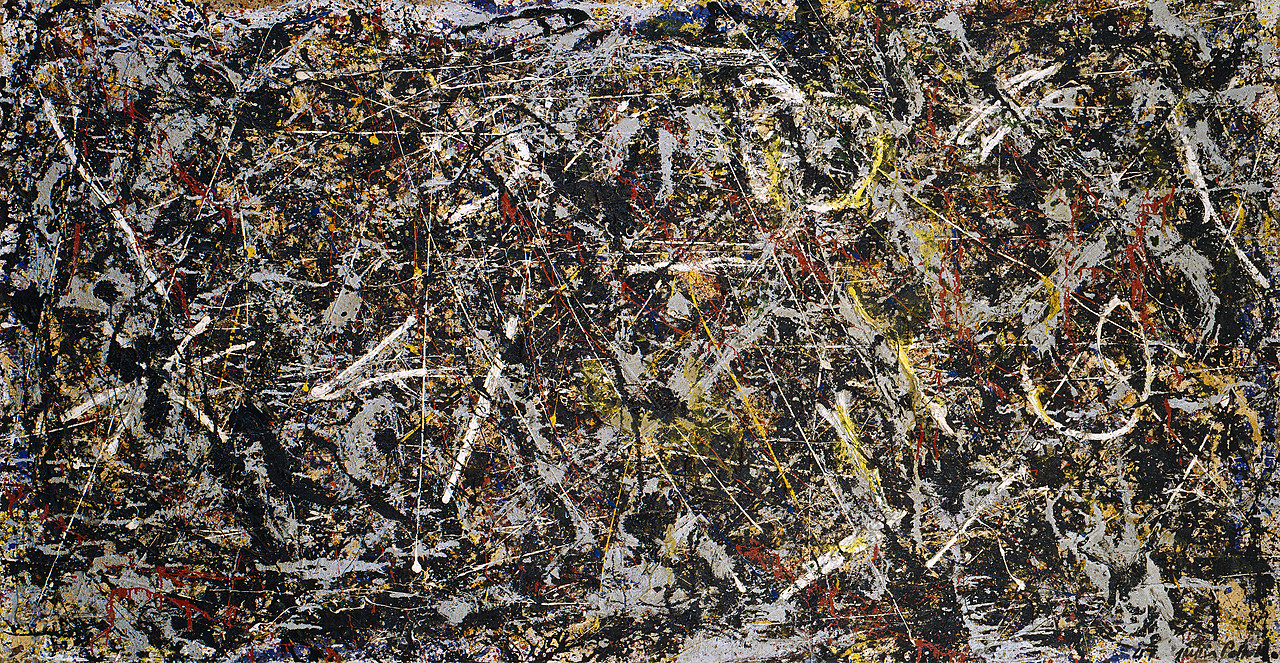
·In 1949, LIFE magazine posed the question: “Is Jackson Pollock the greatest living painter in the United States?” Pollock had become famous for his “action painting” methods that involved slinging, dripping, and slapping paint onto a canvas placed on the floor. His work was sought by collectors and considered some of the highest western art at the time.
At the same time in Japan, Shimamoto was smashing glass bottles filled with paint onto canvas in front of live audience to create his paintings. Shimamoto was nominated for the Nobel Peace Prize for his work and has his art displayed alongside Pollock in today’s prestigious art museums.

Technique
For both of these artists, their paintings lacked the detail of their contemporaries who used traditional techniques. A brush always beats a bottle for detail work. Therefore, realism as a form was impossible. Yet, Pollock and Shimamoto still had control over their methods and could refine their technique over time.
With each work their control over the shape of drips, the spread of bottle explosions, the extent of randomness, increased. This mastery furthered their ability to express their human experience. This human intention, combined with developed technique, is what made their work artistic. We argue that using AI as a technique directed by human experience also makes the output art. Now, the extent to which the output can be controlled - are we using a brush or bottle - is still to be determined.
Emotion
Outside of technique, we must also elaborate on the emotional component of art. For art is not just technique. If we subscribe to the views of Tolstoy, which we do, great art infects the audience with the lived experience of the creator. Therefore, a great AI artist must be able to master the output of AI in a way that allows for the expression of their own latent emotions. Admittedly, this may not be possible. But a thought experiment could help you understand why we are optimistic:
Pick a great author, any author with the experience and skills required to create masterpiece works of literature. For our example, let’s pick Hemingway. Now place Hemingway with all his experience in the Bahamas in front of an LLM. If you gave him 5 years - and a few bottles of bourbon - to master prompting an LLM. To master skill files, memory methods, looping patterns, agents, and commands. Would Hemingway be able to produce a masterwork of fiction from prompting the LLM? We suspect that he could.
We know we are not Hemingway, nor do we dare to claim we are “great writers”, but we do think we are on the cutting edge of Prompt Engineers (Prompt Artists?) and might be able to develop one or two techniques that allow us to impart our emotions more accurately to you, the reader, through the machine. So this is our little experiment, and we thank you for following along.
- Zach
P.S. - If you feel visceral reactions to our experiment, good or bad, contact us. We would love for you to share your experience with our work.
Follow along
New chapters, reflections, and experiments in your inbox.